Gallbladder Surgery in Colombia (Laparoscopic Cholecystectomy)
Not all gallstones require surgery — indication depends on symptoms and objective findings.
From a clinical standpoint, decision-making is based on pain pattern, ultrasound, and risk assessment.
Minimally invasive approaches aim for safe duct protection and a predictable recovery in selected cases.
Gallbladder removal (cholecystectomy) is recommended when gallstones or inflammation cause clinically significant symptoms or complications.
My approach prioritizes clear diagnosis, strict surgical indication, and bile-duct safety—so patients understand when surgery is truly beneficial, and when non-surgical management is more appropriate.
Looking for advanced minimally invasive options?
Learn when robotic surgery adds value in selected complex cases.
What gallbladder surgery treats — and how indication is determined
Gallbladder surgery (cholecystectomy) removes the gallbladder when stones or inflammation produce clinically relevant symptoms or complications.
From a clinical standpoint, the decision to operate depends on symptom pattern, ultrasound findings, laboratory results, and overall patient risk—not simply the presence of gallstones.
Not all patients with gallstones require surgery. Many individuals have incidental stones discovered on imaging without symptoms. Surgical indication is primarily based on recurrent biliary pain, documented inflammation (cholecystitis), pancreatitis of biliary origin, or other complications that clearly correlate with the gallbladder.
Typical biliary symptoms vs non-biliary abdominal pain
Typical biliary colic presents as right upper abdominal pain, often after fatty meals, sometimes radiating to the back or right shoulder, and lasting from minutes to several hours.
In contrast, diffuse abdominal discomfort, chronic bloating, isolated heartburn, or vague dyspepsia are less likely to be directly caused by gallstones. Correct symptom correlation is essential before recommending surgery.
Gallstones vs bile duct stones (choledocholithiasis)
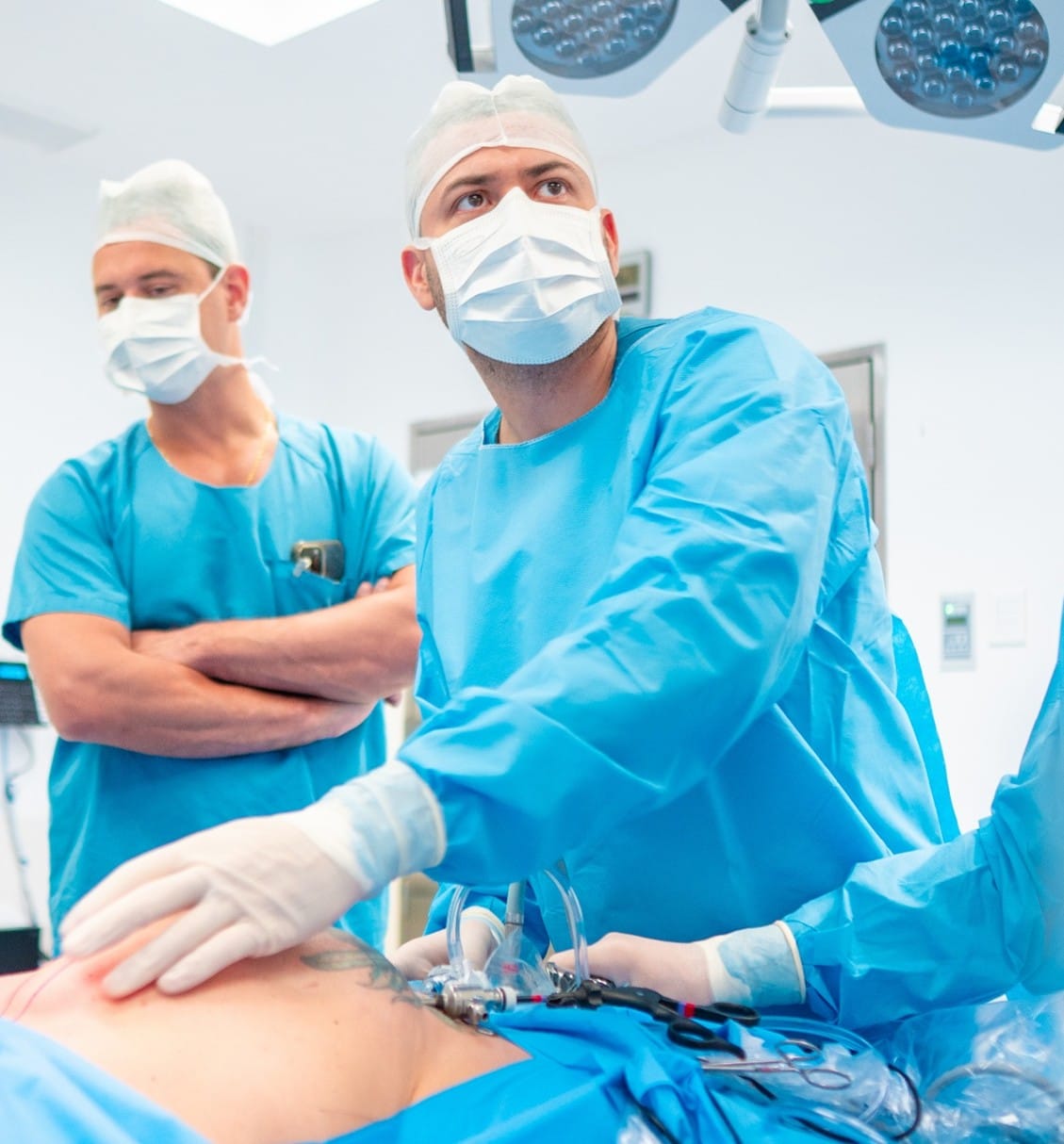
Gallstones located inside the gallbladder are different from stones that migrate into the common bile duct.
When bile duct obstruction is suspected—based on jaundice, abnormal liver tests, or imaging findings—additional evaluation is required before or during surgery.
Management strategy depends on risk stratification and may involve staged or combined approaches to ensure safe duct clearance.
Clinical decision-making and surgical options for gallbladder disease
Clinical decision framework: when surgery is recommended — and when it is not
When gallbladder removal is typically recommended
From a clinical standpoint, cholecystectomy is most often recommended for symptomatic gallstones with recurrent biliary colic, documented cholecystitis, or gallbladder-related complications (for example, biliary pancreatitis or suspected duct obstruction based on labs and imaging).
Surgical indication depends on symptom correlation plus objective findings—not simply on “having stones”.
When surgery may NOT be necessary
Not all patients with gallstones require surgery. Incidental stones without biliary symptoms frequently do not benefit from an operation.
I also avoid recommending surgery when the pain pattern is not biliary and there is no clear clinical correlation—because in those scenarios, removing the gallbladder may not resolve the patient’s symptoms.
Decision-making is based on risk–benefit assessment and diagnostic clarity.
Laparoscopic cholecystectomy: the standard minimally invasive approach
What makes laparoscopy the usual first choice
Laparoscopic cholecystectomy is the standard approach for most patients because it allows excellent visualization and precise dissection through small incisions.
In many cases, this means less postoperative pain, faster functional recovery, and small, discreet scars compared with open surgery—while keeping safety as the primary goal.
How bile-duct safety is prioritized during surgery
The key objective is safe identification of anatomy before dividing any structures.
When inflammation or anatomy is challenging, the strategy may include specific safety steps (for example, additional exposure, alternative dissection planes, or selected intraoperative imaging when clinically justified) to minimize the risk of bile-duct injury.
Robotic-assisted cholecystectomy: when added precision may help
Who may benefit from a robotic-assisted approach
Robotic assistance can be useful in selected cases—such as complex anatomy, severe adhesions from prior surgery, or patients where ergonomics and fine dissection may add safety.
It is not “better for everyone”; the indication depends on complexity and whether robotic capability truly improves risk control for that specific patient.
How this fits within a Colombia-based care pathway
In Colombia, access to robotic platforms may vary by institution and city.
When robotic surgery is considered, the plan should be integrated with the full pathway: preoperative evaluation, safe intraoperative decision-making, and structured postoperative follow-up—so care remains continuous and clinically coherent.
Open cholecystectomy: a safe option when minimally invasive surgery is not appropriate
When open surgery is the right choice
Open cholecystectomy may be appropriate in cases of advanced inflammation, significant scarring, or situations where safe minimally invasive dissection is not achievable.
This is not a failure—it is a safety decision made to protect critical structures when anatomy is distorted.
Conversion to open surgery can be a safety strategy
If visibility is poor or the risk of bile-duct injury increases, conversion to open surgery can be the safest approach.
From a surgical safety perspective, the priority is controlled anatomy and risk reduction—not “finishing laparoscopically at all costs”.
Prefer a patient-friendly explanation of symptoms and local evaluation?
Read the Spanish version on gallbladder surgery and biliary colic.
Laparoscopic and robotic technology in gallbladder surgery
Modern gallbladder surgery is primarily performed using minimally invasive techniques.
From a clinical perspective, technology is not the objective—safe anatomical identification and risk reduction are.
Laparoscopic and robotic platforms enhance visualization and instrument control, allowing careful dissection around critical biliary structures.
- Reduced tissue trauma and controlled intraoperative bleeding
- Lower postoperative pain in many patients
- Faster functional recovery in selected cases
- Small incisions with minimal visible scarring
- Enhanced visualization of biliary anatomy
- Lower complication rates when indication and technique are appropriate
- Precision-oriented dissection prioritizing duct safety
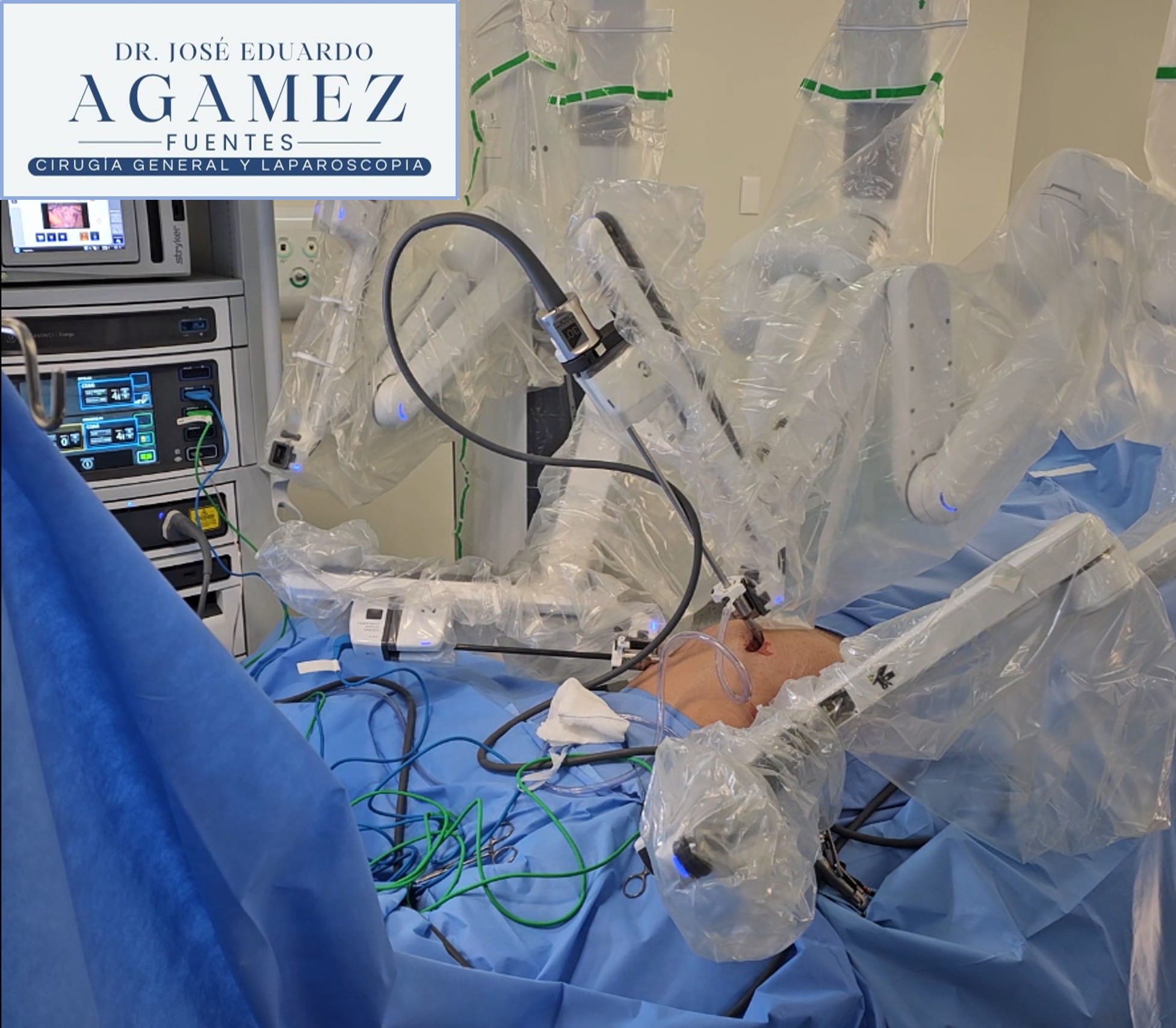
Robotic-assisted surgery: when additional precision may be beneficial
Robotic technology can provide enhanced articulation, stable 3D visualization, and ergonomic advantages in selected complex cases.
However, it is not automatically superior for every patient.
The choice between conventional laparoscopy and robotic assistance depends on anatomical complexity, inflammation severity, prior surgeries, and whether robotic capabilities meaningfully improve safety for that specific case.
Recovery after laparoscopic gallbladder surgery
In many cases, gallbladder surgery is performed as an outpatient procedure, meaning patients return home the same day.
Functional recovery depends on inflammation severity, surgical complexity, and individual health status. Most patients resume light daily activities within a few days.
Diet is typically reintroduced gradually, starting with light meals.
Return to exercise and heavier physical activity should be progressive and guided by medical advice.
Clear postoperative instructions and structured follow-up are essential to ensure a safe recovery and early identification of potential complications.
What to expect during recovery
1. Hospital stay and discharge
Most patients are discharged the same day after minimally invasive surgery.
In cases of severe inflammation or medical comorbidities, short observation may be recommended for safety.
2. Pain and discomfort
Mild to moderate abdominal discomfort is common during the first days.
Shoulder discomfort may occur due to residual gas from laparoscopy and typically resolves spontaneously.
Pain is generally well controlled with prescribed medication.
3. Diet progression
A light diet is usually recommended during the first 24–48 hours.
Most patients gradually return to a regular diet according to tolerance, avoiding very fatty meals early in recovery.
4. Return to daily activities
Light activities may resume within a few days.
More demanding physical exercise is typically reintroduced progressively, depending on surgical findings and patient condition.
5. Digestive adaptation
The body adapts to the absence of the gallbladder by allowing bile to flow directly from the liver to the intestine.
Temporary changes in bowel habits may occur but usually stabilize over time.
6. Warning signs that require medical evaluation
Persistent fever, worsening abdominal pain, jaundice, severe nausea or vomiting, or signs of infection at incision sites should prompt immediate medical evaluation.
Early recognition of complications is critical for optimal outcomes.
7. Follow-up and long-term outlook
Structured postoperative follow-up ensures proper healing and confirms symptom resolution.
When surgery is correctly indicated, long-term outcomes are generally favorable with durable relief of biliary symptoms.
Risk profile, potential complications, and clinical limits
From a clinical standpoint, gallbladder surgery is safe when properly indicated and performed with meticulous anatomical identification. However, like any abdominal procedure, it carries specific risks that must be discussed transparently before surgery.
Risk level depends on inflammation severity, prior abdominal surgeries, anatomical variations of the bile duct, and the timing of intervention (elective versus emergency). Careful patient selection and operative strategy are central to minimizing complications.
Potential complications and decision boundaries
1. Bile duct injury
Although uncommon, injury to the common bile duct is the most serious complication of gallbladder surgery. Prevention depends on strict identification of the critical view of safety and controlled dissection in inflamed tissues.
2. Bile leak
Leakage from small bile ducts may occur in a minority of cases. Most are self-limited or treated with minimally invasive endoscopic management.
3. Conversion to open surgery
In cases of severe inflammation, dense adhesions, or unclear anatomy, conversion to open surgery may be required to ensure safety. Conversion is not a complication; it is a safety decision.
4. Bleeding or infection
These events are infrequent and typically manageable with standard surgical protocols. Risk increases in acute inflammatory settings.
5. Situations where surgery may be postponed
Not all patients require immediate surgery. In selected high-risk patients or those with minimal symptoms, conservative observation may be appropriate. Surgical indication depends on symptom pattern, imaging findings, and systemic risk profile.
Professional Perspective: how I decide when gallbladder surgery is truly necessary
From a clinical standpoint, the goal is not to “remove a gallbladder because stones exist”, but to treat the right problem for the right reason.
Decision-making is based on correlating symptoms with objective findings, ruling out common mimics, and choosing the approach that maximizes safety.
Not all patients require surgery—even if an ultrasound shows gallstones.
My priorities are anatomical safety, clear indications, and a structured perioperative plan.
I avoid rushing patients into surgery when the pain pattern is not biliary, when there is no clinical correlation, or when the best next step is further evaluation.
When surgery is indicated, I focus on risk reduction, careful identification of biliary anatomy, and a recovery plan with clear warning signs and follow-up.
My clinical decision framework
1. I confirm symptom–imaging correlation
Gallstones on ultrasound are common and may be incidental. I look for a pattern consistent with biliary colic (timing, triggers, duration, associated symptoms)
and verify whether the imaging and laboratory profile supports the diagnosis.
2. I actively rule out frequent mimics
Not every right-upper-quadrant or epigastric pain is gallbladder disease.
When the presentation is atypical, I consider other common causes (gastritis/GERD, functional dyspepsia, musculoskeletal pain, hepatic or pancreatic causes),
because removing the gallbladder will not solve a non-biliary problem.
3. I stratify risk and urgency
I assess warning features such as persistent fever, jaundice, pancreatitis, cholangitis suspicion, or significant lab abnormalities.
These scenarios require a different pathway and timing than elective symptomatic gallstones.
Surgical indication depends on the clinical scenario—not only on the ultrasound report.
4. I choose the approach that maximizes bile-duct safety
Laparoscopy is the standard approach in most patients, but the “best” technique is the one that allows safe anatomical identification.
In complex anatomy or severe inflammation, the safest option may involve enhanced imaging strategies, a subtotal technique in selected cases,
or conversion to open surgery when risk increases.
5. I define who may NOT benefit from surgery
I am cautious recommending surgery for incidental stones without biliary symptoms, poorly correlated pain patterns, or situations where the main complaint
is unlikely to improve after cholecystectomy. In those cases, a focused diagnostic strategy is often more appropriate than an operation.
6. I set realistic expectations and a recovery plan
I explain what surgery can and cannot solve, typical recovery timelines, diet progression, and warning signs that require medical evaluation.
A structured plan improves outcomes and reduces anxiety during recovery.
7. I prioritize continuity of care
Follow-up is part of the treatment—not an afterthought.
I prioritize postoperative checks, symptom reassessment, and clear communication, especially in patients traveling for care within Colombia.
Frequently Asked Questions About Gallbladder Surgery in Colombia
Who is a candidate for gallbladder surgery?
Surgery is recommended for patients with symptomatic gallstones, recurrent biliary colic, acute or chronic cholecystitis, gallstone pancreatitis, or complications related to biliary obstruction. Asymptomatic stones do not automatically require surgery. Indication depends on symptom pattern, imaging findings, and overall clinical context.
Can gallstones be treated without surgery?
There is no reliable medical treatment that permanently eliminates gallstones. Medications may temporarily modify bile composition but do not consistently prevent recurrence. For symptomatic stones, laparoscopic cholecystectomy remains the definitive treatment.
What happens if symptomatic gallstones are not treated?
Untreated symptomatic gallstones may lead to recurrent pain, acute cholecystitis, bile duct obstruction, pancreatitis, or emergency surgery. Elective surgery performed under stable conditions carries lower risk than urgent intervention during severe inflammation.
How safe is laparoscopic gallbladder surgery?
Laparoscopic cholecystectomy is one of the most frequently performed abdominal procedures worldwide. When performed with proper technique and anatomical identification of the critical view of safety, complication rates are low. Surgical planning and patient selection are key to maintaining safety.
What are the main risks of gallbladder surgery?
Potential risks include bleeding, infection, bile leak, injury to the bile duct, or conversion to open surgery in complex cases. These events are uncommon but must be discussed preoperatively. Risk depends on inflammation severity, prior surgeries, and anatomical variations.
How long does the surgery take?
Most procedures last between 45 and 90 minutes. Duration may vary depending on inflammation, adhesions, or the need for bile duct exploration.
How long is recovery after gallbladder removal?
Most patients resume light activities within 3 to 5 days. Full return to exercise or heavy lifting is usually allowed after 2 to 3 weeks, depending on individual recovery and intraoperative findings.
Can I live normally without a gallbladder?
Yes. The liver continues to produce bile, which flows directly into the intestine. Most patients adapt without significant long-term dietary restrictions.
Is robotic gallbladder surgery necessary for all patients?
No. Robotic assistance is reserved for selected complex cases where enhanced visualization and articulation may improve precision. Standard laparoscopy remains sufficient for most routine procedures.
When should I seek surgical evaluation?
Recurrent upper abdominal pain, especially after fatty meals, nausea, vomiting, fever, or jaundice warrant prompt evaluation. Early assessment allows safer planning and avoids emergency scenarios.